Research infrastructure
FiDA Neurofinance Lab
- OpeningSummer 2028
- Principal investigatorMarius Zoican
- HomeHaskayne School of Business
- FocusHuman–algorithm interaction
The FiDA Neurofinance Lab is a trading laboratory at the Haskayne School of Business, opening in summer 2028. Its principal investigator is Marius Zoican.
Goals
Trading has moved to apps built for engagement, and algorithms now execute most orders. Markets may be changing faster than people can adapt. The lab has two goals.
- Measure the risks. Identify and quantify the behavioural risks that digital trading platforms introduce, such as excessive trading and costly mistakes among inexperienced investors.
- Reduce them. Use artificial intelligence and biometric data to counter cognitive biases, strengthen financial literacy, and improve outcomes for all investors, particularly the most vulnerable.
To get there, the lab runs controlled market experiments in which participants trade alongside AI-driven algorithms and AI advisors, while sensors record attention, stress, and cognitive load in real time.
The results are meant to inform regulators on consumer protection, guide the ethical design of trading apps, and support the next generation of automated financial advice.
Planned infrastructure
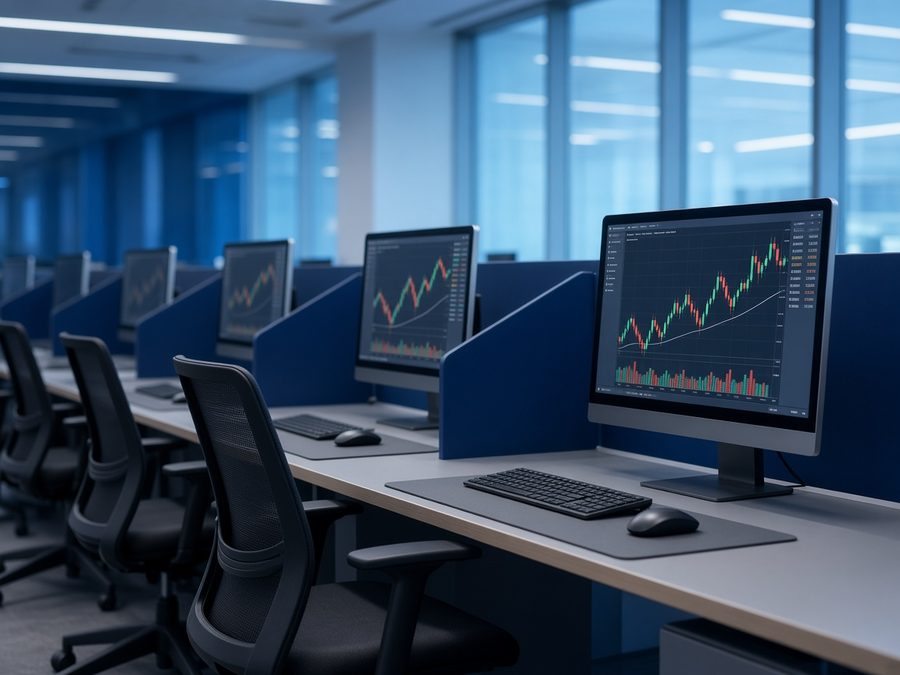
Trading workstations
Nine networked workstations, eight for participants and one at the podium.
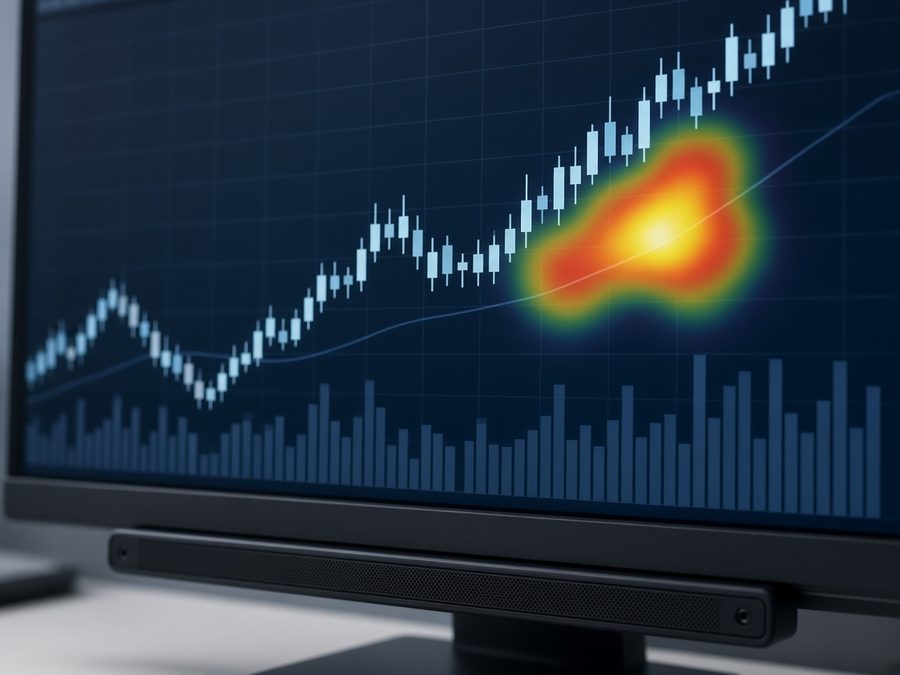
Eye tracking
Screen-based trackers record where attention goes on the trading screen.
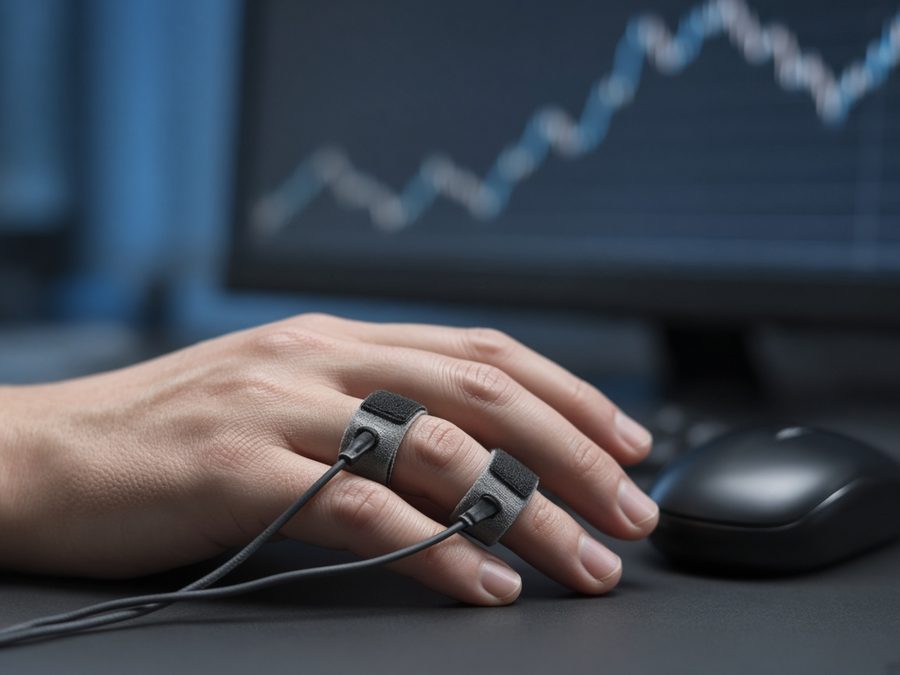
Skin conductance
Finger sensors measure arousal and stress while people trade.
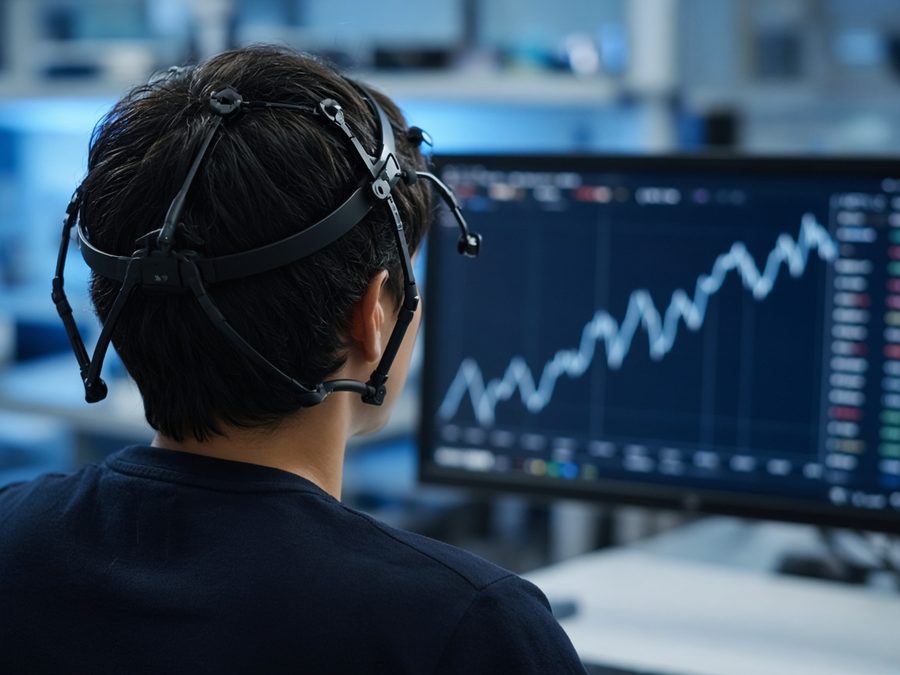
EEG headset
A headset records brain activity linked to attention and cognitive load.
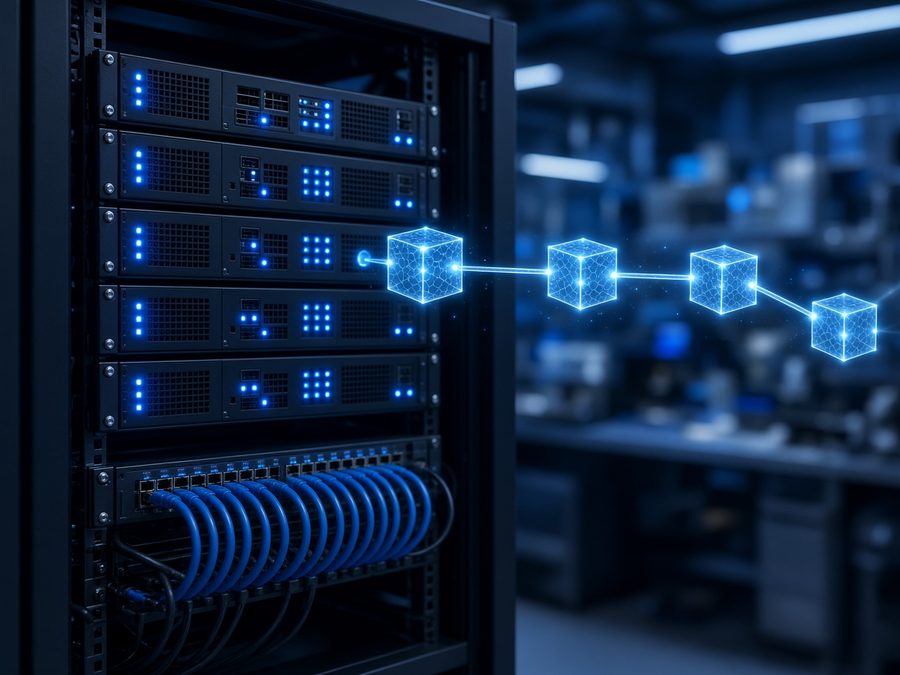
Local blockchain
Experimental markets run as smart contracts on a blockchain hosted in the lab.
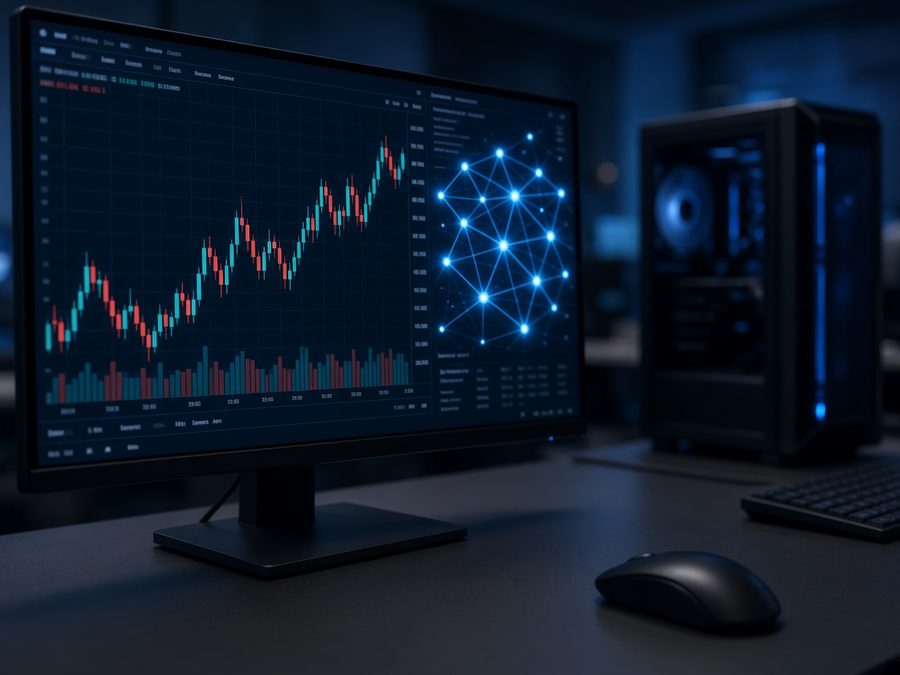
AI agents and advisor
The lab's machines train the trading agents and a locally hosted language model.
Images are illustrative. The lab opens in summer 2028.
Research themes
Trading against AI agents
Participants trade in a market that also contains algorithmic traders, while sensors record attention and stress. We ask whether AI traders lower the load on human traders or raise it, and what that does to spreads and price discovery.
Biofeedback
Models trained on the biometric data look for physiological markers that precede a poor trade. We then test a real-time prompt to pause, or to look back at the fundamentals.
AI advisors
A locally hosted language model comments on a participant's trading as it happens. We ask whether the advice reduces familiar biases, and whether people trust it.
Gamification
A neutral trading screen and a gamified one, with badges and leaderboards, are assigned at random. Sensors show whether attention sticks to the reward rather than the market.
Students can already take part in the lab's experiments on campus. Sign up for a session.

Supported by the Canada Foundation for Innovation.